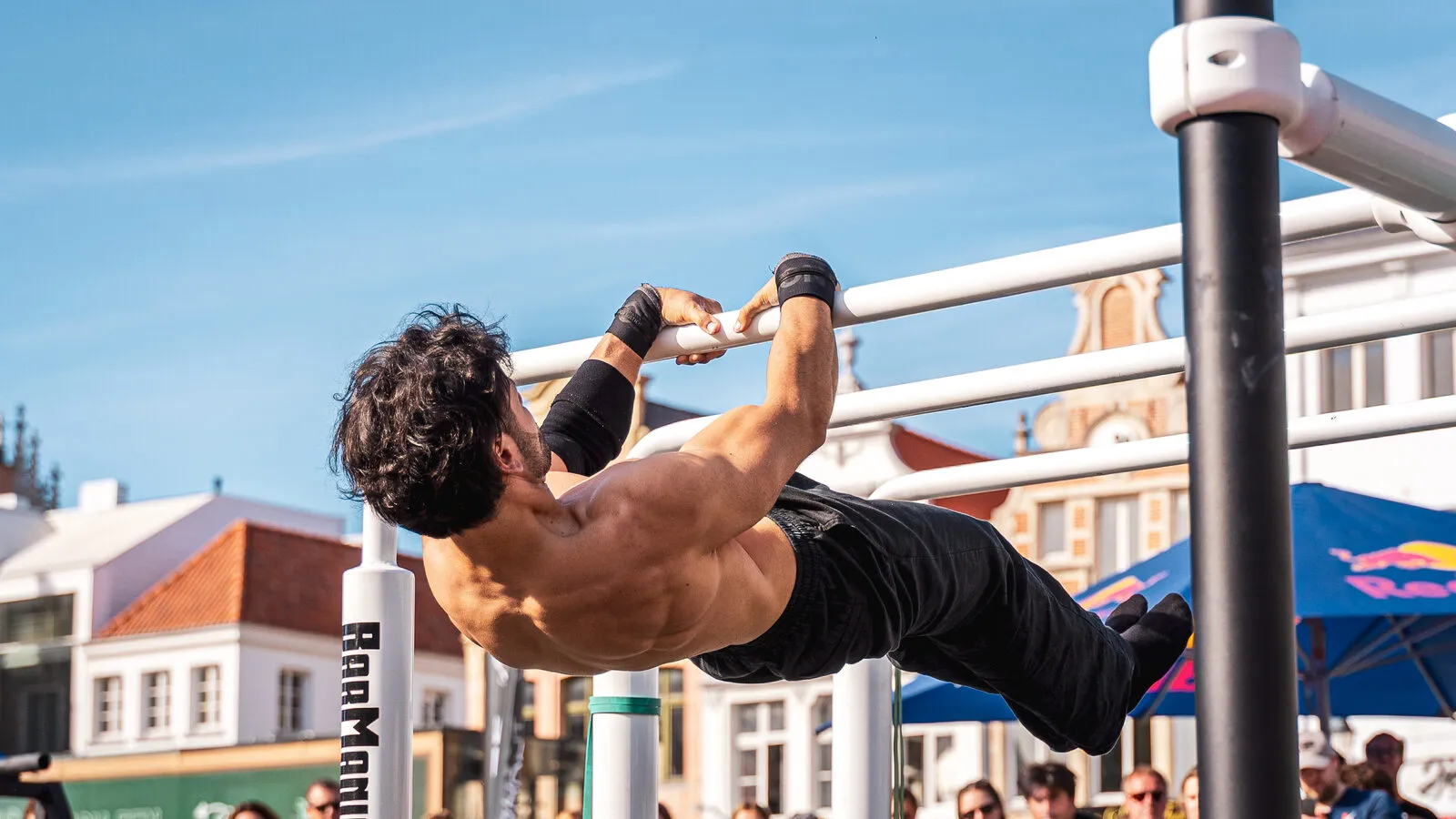
Running a street workout competition takes an administrative run-up that nobody talks about. Athletes see the platforms, the judges and the leaderboard. You see the pile of paperwork that has to exist before the first entry lands. This article gives general bearings and the questions worth asking the right people. It does not replace advice from an insurer or a lawyer in the country where you are hosting. Sports law, compulsory cover and the filings you owe the authorities differ a great deal from one country to the next, sometimes from one city to the next. Treat this as a map, not as a contract.
Public liability is the foundation
Everything starts here. If an athlete, a judge, a volunteer or a spectator gets hurt and the cause traces back to your setup, you are the one on the hook. A badly anchored bar, a slippery platform, a crowd line standing too close to a station, a warm-up area left unsupervised. Organiser public liability covers the harm you cause to other people during the event. Many countries make it compulsory for any sporting event open to the public. Even where it is not, no gym, no town hall and no serious partner will let you build a platform without a certificate. Ask your insurer for a certificate naming the date, the venue and the nature of the event. Check that volunteers are actually covered, they are routinely left out of the base policy. Check as well that the discipline is not excluded as a high risk activity.
Insuring the event is not insuring the athletes
This is the most common mix-up and the most expensive one. Your liability policy answers when you are at fault. It does not answer when an athlete gets hurt on their own, with nobody to blame. A wrist that gives out on a muscle up, a fall from a bar that was rigged perfectly well, a back that locks up on a strength workout. In those cases the athlete's own personal accident cover pays, or nothing does. The practical takeaway is simple. Tell every entrant it is on them to check their own cover. Plenty of organisers also buy a group personal accident policy for the duration of the event. Spread across the field the cost stays small, and it changes the whole conversation on the day somebody goes down.
Federation licences and medical clearance
Where a federation exists in your country and recognises calisthenics or street workout, a licence solves part of the problem. It usually bundles basic personal accident cover and confirms the athlete has been screened or has filled in a health questionnaire. You inherit a framework that is already written, with a rulebook, recognised categories and sometimes a recommended medical setup. In exchange you follow that rulebook and register your date on the federation calendar. Where no federation exists, or where it ignores the discipline, medical clearance comes back to you. Some countries want a doctor's statement that there is no medical reason not to compete. Others accept a self-declaration or a health questionnaire. Others ask for nothing at all. Settle it before registrations open, because the answer becomes a field in your form and it is painful to bolt on halfway through.
| Step | Who handles it | When to start |
|---|---|---|
| Organiser public liability | Your insurer, or the federation's | As soon as the date and venue are locked |
| Group personal accident cover | The same insurer, often as an add-on | Before registrations open |
| Permit to occupy public space | The town hall or the site manager | Very early, this is the slowest step of all |
| Event filing with the authorities | Local council or state authority, depending on the country | As soon as you can estimate crowd size |
| Medical and first aid team | First aid charity or public service | Before you announce publicly, teams book out fast |
| Medical clearance or health form | Each athlete, checked by you | When you build the registration form |
| Waiver and image rights | You, reviewed by a local lawyer | Before the first paid entry |
An outdoor spot changes the rules
A street workout park is nearly always public land. You have no right to bring in a sound system, barriers, a judges' table and a queue without permission, even though the place is free to use the rest of the year. The request goes through the council or the site manager. It covers footprint, timings, noise, power and clean-up. Budget generously on lead time, this is usually the slowest part of the whole build. Past a certain crowd size, most countries also require you to file the event with the local council or a state authority. The form, the trigger point and the notice period vary a lot, so never assume that what people do across the border applies where you are. Call the sports desk at the town hall, it costs nothing and they do answer. Think about the kit you bring in too. A mobile rig, a marquee or a camera tower each need their own sign-off.
First aid is planned, never improvised
A street workout competition mostly produces ordinary injuries. Torn hands, shoulders, ankles on landing. The rare serious risk is still a fall from a high bar. A first aid team sized for your crowd has to be on site from the first warm-up to the last heat. Depending on the country it is imposed by whoever receives your event filing, or merely recommended. Either way, book early. First aid charities are stretched thin through spring and summer. Prepare a sheet for each platform with the exact address, the vehicle access point and the name of the person in charge. Brief your judges so they know they can stop a workout without hesitating, that is their job and nobody will hold it against them.
What the waiver really covers
The waiver signed at registration matters, just not for the reason most people assume. It does not release you from your own fault. No wording lets you declare that you will not be liable for a platform you built badly. What it does is prove the athlete was informed. It records that they understood the nature of the discipline, the risks that come with it, how the heats run, and that having first aid on site does not replace their own judgement. It also collects image rights, an emergency contact and acceptance of the rulebook. Write it in plain language, in the language your entrants actually read, and keep a timestamped record of the acceptance. A checkbox in the form carrying the date and the person's identity beats a sheet scribbled on a table on the morning of the event. On Calisthenics Corner that acceptance is stored with the order, so you are not hunting for it a year later.
Frequently asked questions
- No, and that needs saying plainly. Sports law, compulsory cover and administrative filings differ a great deal from one country to the next, sometimes from one city to the next. This piece gives you principles and questions to ask. It never replaces advice from an insurer or a lawyer in the country where you are hosting. An hour with a broker who knows sports events costs far less than a claim you were not covered for.
- In most cases yes. Charging nothing changes nothing about liability. The moment there is a crowd, judges, heats and a leaderboard, you are an organiser in the eyes of the law. The only genuinely different case is an open session with no entry and no ranking, and that line is thinner than it looks.
- It proves the entrant knew the risk. It does not cover your fault. If a bar fails because it was rigged badly, no signature will save you. The waiver and the policy work as a pair, one informs and the other pays.
- It depends on your country and your federation. Where a licence is compulsory, that screening is already done. Where it is not, many organisers ask at minimum for a statement that there is no medical reason not to compete. Put the question to your insurer, because the answer often decides what your policy will cover.
