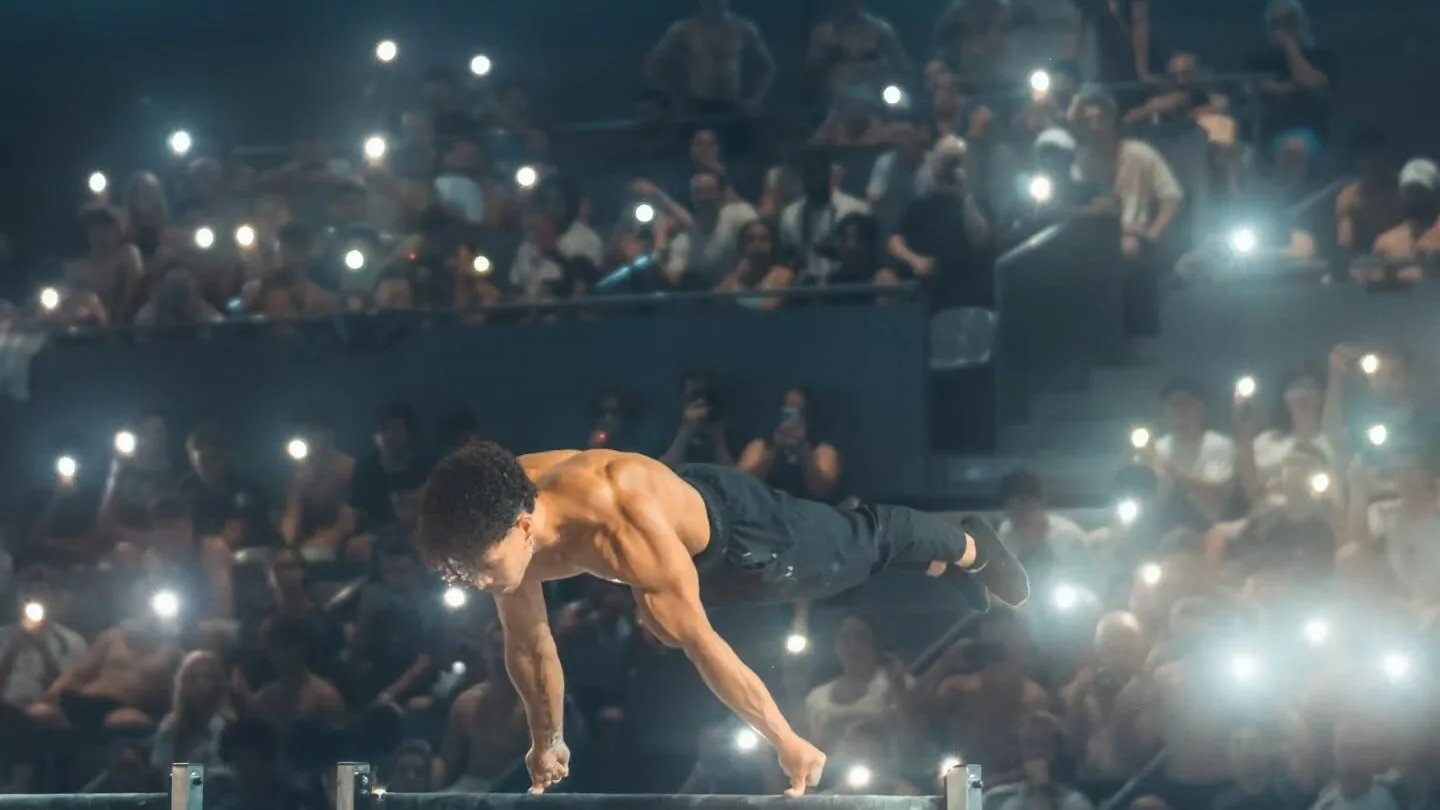
You have been training on the bars at your local park for a year. The muscle up is there, your sets are climbing, and the idea of testing yourself against other people has started to stick. All that is left is finding where. That turns out to be the frustrating part, because no single place lists every street workout competition.
Where events actually get announced
Most street workout events are announced on Instagram. Clubs, spot collectives and the athletes running the thing post a flyer, sometimes only a story, and the entry link lands in the bio. It is the fastest channel and the least permanent, since a story is gone in twenty-four hours. Following the five or six active accounts in your area is still the most reliable way to catch everything.
Then come the local groups on Facebook or WhatsApp, usually tied to one specific park. Announcements circulate there before the flyer even exists. Federations publish calendars of their own, genuinely useful for streetlifting because that side of the sport organised itself faster. Registration platforms gather the events that sell their spots online, with dates and categories already spelled out. On Calisthenics Corner they are gathered in the street workout competition calendar, updated every night.
Why it is so scattered
The scene grew outdoors, spot by spot, with nobody in the middle keeping a list. An event starts when a group that has trained together for two years decides to invite the neighbouring parks. Nobody reports that to a national calendar. Streetlifting is the exception because records and weight categories force a shared framework. For freestyle and endurance the information stays local and travels by word of mouth.
Reading a listing and knowing if it is for you
A flyer rarely tells you everything. What you need fits in a few lines, the workout format, which categories are open, the level expected and what the entry fee covers. If the listing does not say what is being measured, message the organiser. On this scene you usually get an answer within the hour.
| What the listing says | What it means | What it changes for you |
|---|---|---|
| Freestyle battles | Runs scored by a panel of judges, head to head | You need a prepared routine, not just raw strength |
| Streetlifting | Weighted pull ups and dips, weigh in before the start | Your total is scored against your bodyweight |
| Endurance or max reps | Reps counted and validated by a judge | Range of motion counts as much as the number |
| Beginner category | Reserved for first time competitors | This is where you start |
| Open category | Open to anyone, no level filter | You may end up against seasoned athletes |
What to sort out before your first one
You bring very little. Chalk, grips if you use them, a dip belt and your plates if you are lifting, and enough food and water to cover a full day. Photo ID is often asked for at the desk, along with a medical certificate or a licence depending on the organiser. Pack more clothes than you think you need, an outdoor event in October means waiting for your turn in the cold.
When you arrive you check in at the desk, sign the list, pick up your number and the time of your heat. In streetlifting the weigh in comes first, one to two hours before the opening run, and it decides your category. After that you wait. That is the part nobody expects, a competition day is mostly waiting between runs that last a few minutes on the platform.
Entry deadlines
Entries almost always close before the day itself, usually a week out. That is not red tape, the organiser needs a final list to build the heats and assign the judges. Spots also go faster than people assume, a local event with forty places can fill in three days. Sign up as soon as the link opens, and check whether there is a waiting list, it moves a lot in the final week. Answers about registering, paying and finding your heat time are in the athlete help.
If nothing exists near you
This is the well worn path in street workout. Plenty of athletes hunt for a competition for months, find nothing within three hours of home, and end up running their own. A first edition needs a park, two categories, one format and around forty entries. The rest, the heats, the judges and the leaderboard, is handled from a phone these days. The real barrier is not the organising, it is deciding to start.
Frequently asked questions
- Not in a beginner category, which exists for exactly that. If you can hold ten strict pull ups and you know the range of motion standards, you are ready to show up and finish your day.
- Between fifteen and forty euros at a local event, more for a qualifier with a proper platform and a production crew. The fee usually covers your number and the event shirt.
- Look at last year's results if the leaderboard is public. The score of the last placed athlete tells you far more about the real level than the winner's score.
- Almost always, since most events are held in an open park and entry is free. It is the best possible preparation before signing up for the next one.
